by Oscar O’Sullivan
Monday – The Damned
Now it can feel a little mean to make fun of someone’s first feature film, especially when it’s only playing in festivals and probably won’t be seen by any of the people who are reading this. Nevertheless.
Tuesday – Withnail & I
A classic ‘odd couple’ comedy with melancholic undertones, Withnail & I follows the adventures of two struggling actors as they flee their troubles in London with an ill-advised country break. Our heroes aren’t exactly sympathetic – Withnail (Richard E. Grant) is a pompous alcoholic who refuses to take responsibility for any situation he finds himself in, while the nameless I (Paul McGann) is prone to paralysing panic and general incompetence, haplessly caught up in Withnail’s harebrained schemes. What follows is a classically British comedy of manners as the protagonists get themselves in hot water with the rural locals. It’s funny enough, if a little repetitive and dragged-out, but ascends to true comedy genius with the reintroduction of Monty (Richard Griffiths), Withnail’s wealthy uncle who loaned them the use of his holiday cottage. Monty’s first scene is hilarious enough, as he reminisces about his own dashed dreams of the theatre and rages at his misbehaving cat. His return over halfway through the film, joining the duo in the cottage, is uproarious, by far the best stretch of the film. He immediately takes a shine to I and begins to make not-so-subtle advances, finding new ways to corner the increasingly terrified young man as Withnail ignores this casual harassment so he can continue enjoying free food and wine on his uncle’s dime. Griffiths is magnificent in the role because he plays it with his whole chest, leaning precipitously into the cartoonish campiness of this figure but somehow still keeping him a real person with real, even touching feelings. The film slumps ever-so-slightly after his exit, as if he has let some of the air out with his absence. The ending brings things home with a turn into gloominess that almost feels sudden – perhaps the film plays differently with the knowledge that it’s all an exercise in futility, two men who refuse to grow up playing at vagrancy to avoid the reality that they’ll never get anywhere unless they knuckle down, shape up and ship out. 8/10.
Wednesday – The Duellists
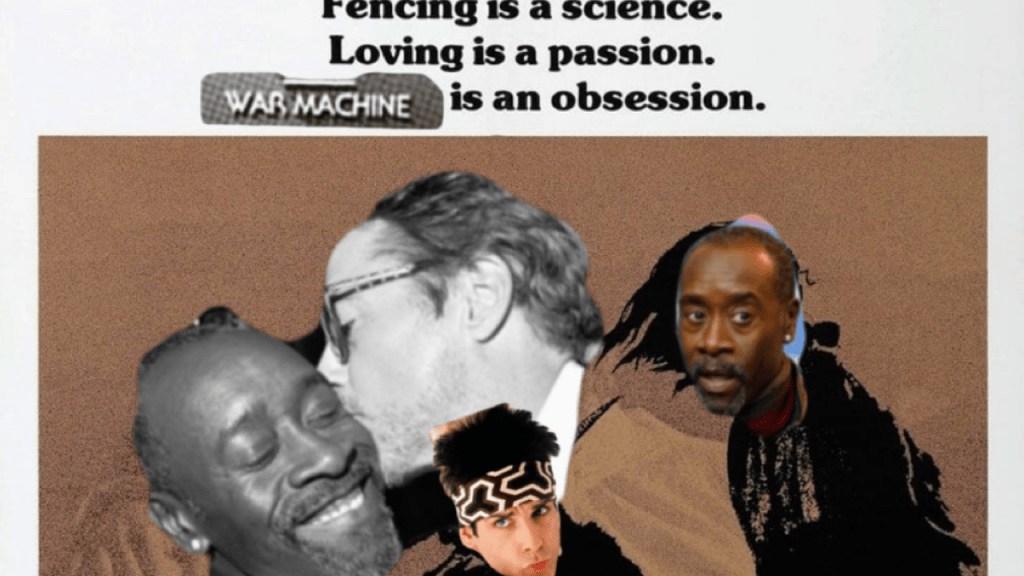
The idea of a great debut film often hinges on the perception that a director has sprung up from nowhere with a fully-formed cinematic voice and nailed it on their first go round. While this is sometimes the case, it’s more common that a great debut is the result of years of training in a different medium. Two of the greatest-ever debut films, Sydney Lumet’s 12 Angry Men and Michael Mann’s Thief, were helmed by directors who had honed their craft on television before making their first feature. Which brings us to Ridley Scott and his magnificent debut film The Duellists, released when he was already 40 – after directing thousands of commercials in Europe, he realised nobody would ever approach him for a feature, so he put one together himself. Based on a story by Joseph Conrad (which Ridley chose because he wouldn’t have to pay for rights), the film follows the exploits of two French soldiers during the Napoleonic Wars of the early 1800s. The film is visually breathtaking, taking it’s cues from the seminal Stanley Kubrick film Barry Lyndon to create a lush, deeply textured vision of the era. Far from being a sweeping history or sterile diorama, the film tells a focused, personal and at times hilarious story – Armand d’Hubert (Keith Carradine) stumbles into a lifelong rivalry with Gabriel Feraud (Harvey Keitel), a notorious duellist who takes issue with being reprimanded for killing a well-connected opponent. Armand is goaded into duelling Feraud, wounding him and his pride, kicking off a rivalry that spans decades and several regime changes. Each man advances in the army, their paths intersecting again and again at key moments, their duels becoming so vicious and infamous precisely because nobody even knows what sparked their rivalry – eventually even the duellists themselves seem to forget the inciting incident, driven purely by a mutual hatred and desire to be rid of the other man once and for all. Armand does a better job keeping his head, sobered by the loss of a lover who refuses to watch him die in a pointless duel and mellowed by married life after Napoleon is deposed. Carradine plays the role with a careful balance of manners and charm – this is a proper gentleman, a man who follows the rules to a fault, but with a passionate, roguish streak. Keitel, by contrast, plays Feraud as pure seething ego. He’s brash and outspoken, a commoner who has come to his position by hard work and is violently protective of his own personal honour above all else. Just like in his extraordinary turn as Judas Iscariot in Scorsese’s The Last Temptation of Christ, Keitel uses his natural Brooklyn accent in a period piece. Far from sounding anachronistic, it highlights the inherent artifice of the traditional “Proper English” accent used for such films – by all rights, everyone in this story should be speaking French. If we are accepting the fiction of them speaking our modern language, we should also be willing to accept them using our modern accents. Of course, a film that proclaims itself to be about combat would want to deliver on that front. And deliver it does, with impressive feats of swordplay and athleticism each time the pair clash. The choreography is top-notch and the often-invisible art of sound design completes the illusion – blades swish and clang prodigiously, while an extra visual flair is added by the sparks that fly whenever swords clash, an effect achieved by hooking them up to batteries. In my reading on the film, I discovered that it was cited as the main inspiration for Highlander, the greatest film ever made, and it made perfect sense – a lush period epic with brutal one-on-one combat, intense personal stakes and a cheeky sense of humour. The final shot of one of the duellists looking out over the French landscape, sunlight streaming through the clouds, is one of the most painterly cinematic images I’ve ever seen – a perfect capstone to this story, a premonition of what was to come in one of the most prolific directorial careers in Hollywood. 10/10.
Thursday – Before Sunrise and Brother
To meet the love of your life and only have a day together – the film practically writes itself. Everything about the central relationship of Before Sunrise springs out of fate and chance. Céline (Julie Delpy) only sits next to Jesse (Ethan Hawke) to get away from an arguing couple. Furthermore, she’s only on this train in the first place because of her fear of flying, while we later learn that he’s been inter-railing after his planned holiday turned into a disastrous break-up. Neither of these people are meant to be here, yet here they are – no wonder they’re both so willing to see where this journey takes them next. They wander the streets of Vienna, growing closer in the full knowledge that they’ll only have this one day. No matter how strong of an immediate connection you feel with someone, you can’t realistically upend your entire life in an instant to be with them. The subtle dynamics of the relationship shift and morph over the runtime as each character grapples separately and together with their feelings. While this is almost a chamber piece, focused to the exemption of all else on the two lovers, there are moments where it suddenly pulls back to remind us that there’s a whole wide world around them – glimpses of strangers’ conversations, losing our leads in a crowded street and, in a particularly evocative sequence, showing us each of the places that Jesse and Céline visited together now standing empty and silent. Some of these spots are mundane, others beautiful, all of them united in the meaning they now hold to a pair of strangers that may never visit them again. 9/10.
Early in Takeshi Kitano’s Brother, two characters stand atop a tall building and, idly passing the time, toss down a paper airplane. The camera follows its arc, back and forth as it descends towards the street, hanging in the air for a moment at each turn of its path. Joe Hisaishi’s score swells, the airplane drifts down out of frame, we cut to the next scene. This sequence perfectly symbolises the arc of the film, a story turns the predictability of the “rise-and-fall” crime saga into tragedy. The paper airplane is beautiful to watch in flight, swooping and soaring with casual grace, but we know its flight is not true flight – it is gliding, falling, on an inevitable downwards path, a fleeting and fragile thing. So too is the easy life the gangster – a burst of wealth and luxury built on violence, with violence inevitably due to them in return. Protagonist Aniki (Kitano himself) flees Japan after his boss is murdered and his Yakuza gang absorbed into another clan. Unwilling to play nice with his former enemies, he goes to live with his half-brother in Los Angeles, despite not speaking a word of English. Despite this disadvantage, he’s more than fluent in the universal language that governs the criminal world – violence. He very rapidly rises to the top of the heap in L.A.’s ganglands, being driven around in a limo and operating out of a swank high-rise office. His brother and his American underlings are having the time of their lives, two-bit crooks suddenly living like kings, but Aniki seems to only grow more and more melancholy. He has realised, now that he is the top dog, that his former boss’ murder was not a tragedy, but an inevitability. And unlike in Japan, where twisted honour codes will see defeated enemies invited into the ‘family’, American criminals play for keeps – when the Mafia comes calling for their cut of the empire, the only outcome possible is wholesale slaughter. Would it have been better to keep both feet on the ground in Japan? Maybe, but Aniki wanted to fly – and for the briefest of moments, he does. Like a paper airplane. 10/10.
Friday – Donnie Darko and Serial Mom
A unique film in many ways, a blending of disparate tones and ideas grounded in virtuoso filmmaking technique and capped with one of the most iconic and moving ending needle-drops of all time. If you haven’t seen Donnie Darko, I suggest you remedy that – while it’s blend of irreverent comedy, faux-philosophical musings and strange science fiction interludes may not be for everyone, I can guarantee you’ll take something away from this one-of-a-kind classic. 10/10.
It can hard to explain why a comedy film works without just listing off jokes that it does. So I’ll keep this brief – Serial Mom is a deftly satirical joyride that blends razor wit with unabashed stupidity in a deliciously deadpan manner. Storybook visuals subverted by graphic content, perfectly tuned sitcom-esque performances, dozens of throwaway gags that had the audience in stitches. Watch it! 10/10.
Saturday – The Belle From Gaza
A documentary that takes a casual, objective viewpoint on the subject matter at hand. Formally, it engages – voyeuristic street filming, intimate interviews, editing flourishes at key moments to overlap and meld together pieces of what we’ve already seen. What fails to impress is the actual content of the film, as the objective eye winds up feeling incurious, almost uninterested. The film tells the stories of transgender Arabic and Muslim women living in Israel – while much is made of how dangerous it would be for them to live as they are in their homelands, the film fails to comment upon the obvious state of their existence in Israel as a barely-tolerated sub-culture of sex workers and abuse victims. Of course, maybe the filmmakers thought it was too obvious to require comment, but there’s still something irresponsible about the central endeavour, an attempt by director Yolande Zauberman to find a woman she met years ago who claimed to have walked from Gaza to Israel for her sex-change operation. At every turn we are told that such a pilgrimage is impossible and, even if the woman in question had done it, she would be deported and probably killed if it was discovered, with many of the interviewees clamming up when the topic arises for fear of being implicated themselves. No good reason is ever offered for tracking down this ‘Belle from Gaza’ aside from the director’s own passive curiosity – hence, the feeling of irresponsibility. Lives are on the line for the participants of this documentary. It’s not even clear if it all means anything to the director.
Sunday – The Brutalist
Review coming later today or tomorrow – whatever I feel like really. A big movie deserves some big words.
 Oscar Talks Movies
Leave a comment