by Oscar O’Sullivan
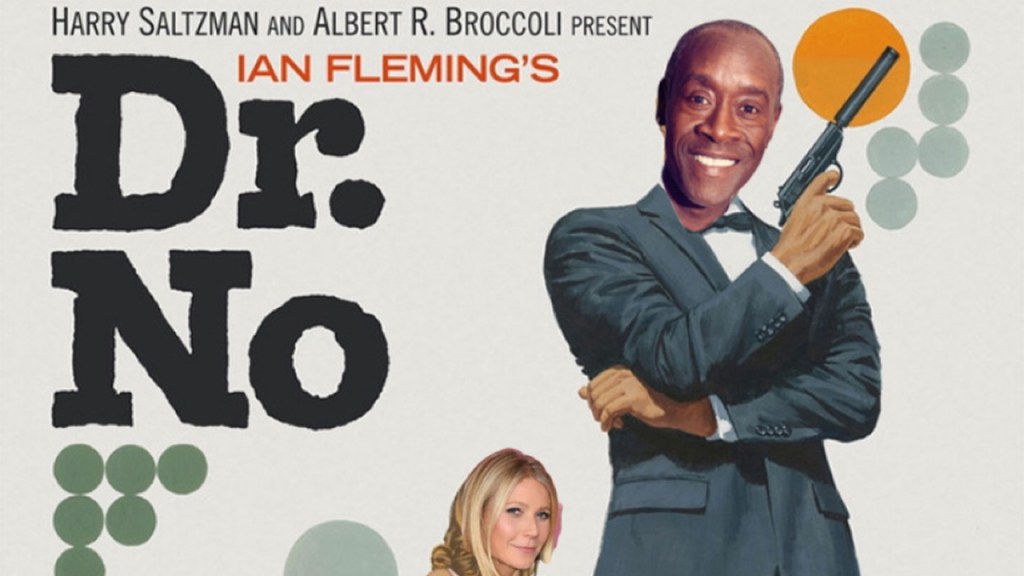
Monday – Dr. No
The greatest character introduction in film history? Not the film itself per se, but the actual first scene where we meet James Bond. We’ve heard his name, know a message has been sent for him and he’s at a luxurious casino. At the table there’s one man whose face we can’t see, obscured by people and objects in the foreground in the wide shots. He seems to be winning. We cut into a close-up over his shoulder, gauging the expressions of the dealer and the wealthy lady he’s playing with. As his streak of luck continues, she asks his name. Sean Connery fills the frame – suave, relaxed, the image of refined masculinity. “Bond,” he says. Pausing for a brief moment to light up his cigarette, he continues: “James Bond.” Simplicity itself. This scene, now beyond iconic, represents what works so well about the film as a whole. A spy thriller with a relatively low budget, the inaugural instalment in the 007 film series makes the limitations work for it. Bond isn’t jet-setting around the globe with an arsenal of flashy gadgets – he’s confined to Jamaica with his gun and his wits in a story that’s more of a detective tale than an action thriller. He snoops around, gathers clues, chats up the locals and gets into some amusing scrapes – Judo flipping his crooked chauffeur, outracing a hearse along a treacherous cliffside, seducing a villainous secretary before using her room as a trap to catch out a conspirator before casually gunning him down. Connery’s Bond is perfectly cool and callous, a man with a licence to kill and no reservations about putting it to use. The second half becomes more of an adventure film as Bond infiltrates the island lair of the titular villain with the aid of local boatsman Quarrel, a black character who manages to (almost) entirely escape the negative stereotyping you’d expect from the 1960s. They’re joined by the original Bond Girl Ursula Andress, whose role in the plot is to show a lot of skin and get Bond into trouble. A feminist masterpiece, this isn’t. It’s also difficult to reckon with the representation of the Chinese people who feature as the main antagonists. Dr. No himself being a white man in vaguely Asian makeup is so ridiculous by our standards that all you can really do is laugh, which is just fine – he works even better as an over-the-top punchline than as a serious villain. This back half is also where the visual ingenuity of the film shines, with the sets for the island lair especially looking incredible. While they may be obviously artificial, they’re shot in such a grandiose manner that it elevates the tone of the entire film. The actual plot is a stock excuse for a series of wonderfully realised set-pieces and sharp dialogue – it barely even warrants mentioning. Cultural context aside, Dr. No holds up as a grounded, yet still fun and often tongue-in-cheek spy caper that has set the bar high for the rest of the series, which I plan to watch weekly. 9/10.
Tuesday – The Terminator
Always tough to realise that a film hasn’t lived up to your expectations, especially when it’s something you’ve been told is a classic all your life. I wanted to love The Terminator and in many ways it did deliver what I was expecting from it – maybe that’s the problem. It’s hard to be surprised by a film that’s so ingrained in pop culture, but that’s hardly a fair way to judge a story. It’s undeniably a work of great imagination, tightly paced and well-executed. But there’s something about it not quite sparking off for me, something missing beneath the shiny surface. For as innovative as the story and blending of genres may have been, what disappointed me was how conventional the filmmaking felt. Nothing in the cinematography or effects work stood out as exceptional compared to other 80s sci-fi films, whereas I’ve come to expect the sun, moon and stars from James Cameron when it comes to cutting-edge visuals. His steady hand and eye for excess are on display here, as well as the beginnings of his knack for weaving love stories into action narratives. Even at this early stage he knew how to get what he wanted out of an actor – Arnold didn’t even know how to act yet and Cameron twisted that stiffness into the film’s greatest strength. The Terminator itself really is the film’s crowning achievement, the ultimate unstoppable slasher villain – like Michael Myers with a layer of machismo irony and a talent for one-liners. He’s so compelling that it takes away from your engagement with the lead characters – time spent with them is time away from the magnificent killing machine. The idea of the human facade being worn away as the film progresses is brilliant but the execution leaves the middle phases looking a little goofy in a way that can’t be fully ignored, especially the period Arnold spends with no eyebrows. The final chase with the fully robotic endoskeleton would be a fantastic denouement to the action if it didn’t drag on just a touch too long. Interesting that this is still held up as an untouchable classic when the sequel, by all accounts, surpasses it in every way. 7/10.
Thursday – Harakiri
The Letterboxd Top 250 can be a contentious list at the best of times, but it does serve it’s purpose as an unofficial “canon” of the modern film fan – a middle ground between arthouse critical consensus and populist blockbuster thinking. The long-time holder of the top spot on the list, Harakiri, sits down in 44th place on the IMDB Top 100 and didn’t even make the longlist of the prestigious Sight and Sound critic’s poll. What is it about Harakiri that makes almost unanimously beloved among modern film fans? I think a big part of it’s appeal is that, for all it’s craft, depth and complexity, it’s also one of the most accessible films for an amateur cinephile – not necessarily easy to come across, I mean, but easily recognisable as a great film even to the untrained eye. The story is simple and easy to engage with – a masterless samurai wants to commit suicide at the compound of a powerful clan, telling them the story of how he came to be in such a sorry state as the ritual is prepared for. What creates the tension and intrigue of the plot is the order in which key information is revealed. Nothing that happens could be called a shocking twist by any means, but it does keep you guessing. It’s a dialogue-heavy example of a genre known more for bloody swordplay, waiting until it’s story has been fully told before treating the audience to a series of magnificent duels (choreographed using real weapons for added authenticity) – it’s like if 12 Angry Men concluded with tensions in the jury room boiling over and a physical brawl breaking out. Lead actor Tatsuya Nakadai is phenomenal, giving two very different performances in the parallel storylines. Flashbacks show him as a devoted family man who keeps his spirits up even in times of poverty, while the man recalling these times in the present is a shell of a person, his face fixed into a deadened grimace that’s occasionally broken by a mirthless, robotic laugh. He’s a man who doesn’t care what happens to himself anymore – all that matters is battering the high-and-mighty samurai with their own hypocrisy. Harakiri is a monumental film that has earned it’s top spot in the modern canon and a rare example of a film that is both a perfect jumping-on point and one of the finest examples of it’s genre. 10/10.
Friday – Friday the 13th (2009)
A horror remake/reboot that stands alongside the best the franchise has to offer – which isn’t a high bar for a Friday the 13th film, but still a welcome surprise. The 2009 remake wisely models itself mostly on the third and fourth films, with the plots of the first and second thrown in as a fun prologue/retelling. Beginning with the fifth film the franchise became an increasingly goofy self-parody, so a return to the simple pleasures of the original formula without any clumsy self-referential humour was the right call. It also helps that there’s no attempt made to mythologise the franchise – Jason Voorhes is iconic enough without the audience having to be told to feel reverential. The film’s biggest weakness is how it looks – sleek modern cinematography and “realistic” night-time lighting don’t mesh with the rough, dirty tone. The lighting especially can harm the film’s kills, which are exceptionally done when you can actually see them. Jason is fast, physical and as inventive as ever in the ways he tears through the film’s cast of hilarious teenage archetypes. One of Jason’s best-ever outings that proves the classic, no-nonsense slasher formula can still be played straight effectively after all these years – a shame that it’s been put aside in favour of “elevated horror” and legacy sequels. 7/10.
Saturday – Caligula: The Ultimate Cut
Proudly proclaiming itself as “the most expensive independent film in history”, Caligula is a unique, deliciously sloppy and visually stunning experience. It has all the bawdy, lawless insanity of a low-budget exploitation film but with the imagery of a prestige epic – the clash of form and content creates a film that baffles as much as it delights. Released originally in a butchered form as a pornographic spoof film, this modern recut aims to restore the serious tone that the actors had wanted to embody. While the performances do shine through, the overbearing tone is still inevitably comedic – it becomes difficult to take Roman political intrigue seriously when even simple dialogue scenes will have a half dozen men sadly wanking in the background. Rarely have I felt the absence of a directorial vision so clearly in a film – editor Aaron Shaps has done his best to find a coherent tone in the midst of the madness but there’s just too much going on in the film. Works best when you just accept the chaos and marvel in how a film this filthy was ever made on this level. 8/10.
As an aside, I had the pleasure of seeing this at the Triskel Arts Centre, supposedly the only screening this film will be receiving in all of Ireland. The film was preceded by a “video essay” dedicated to Teresa Ann Savoy, who played Caligula’s sister in the film. It was, to be frank, uncomfortable – a ten-minute montage of the actress being sexualised in various film roles set to ambient music followed by a brief text crawl explaining her career and legacy. A very poor way to set the tone for the film and deeply strange as a “tribute” to the actress. Strangest of all is that it was created by a member of staff at the Triskel – probably not fair to call screening this short an abuse of power, but it’s kind of unbelievable.
Sunday – Zatoichi: Darkness Is His Ally
Shintaro Katsu’s final outing as his iconic character is a mixed bag, though skewing more positive than not. Interestingly, it makes very little of the fact that Zatoichi is now visibly much older than we last saw him – if anything he’s more invincible than usual and no mention is ever made of his age or mortality. This is a decision I can get behind – the blind swordsman was always a mythical, unchanging figure. Best to let him stay that way, even at the last, so that we can keep his story going in our hearts. The plot is a hodge-podge of of the usual series tropes that is shockingly unfocused in it’s execution. It’s never clear who the villains are or what they want, how or even if Zatoichi is involved or what the stakes are before he intervenes in the final battle. The one character with some potential, a masterless samurai and artist who befriends Zatoichi, suddenly disappears from the film halfway through and returns in the final scene without ever being developed beyond his introductory premise. Despite the weak story, the series’ signature action remains incredible, the unique musical choices make it stand out from the rest of the pack and it’s just a pleasure to watch Katsu in action one last time. This is goodbye to his incarnation of the character until I eventually circle back to the TV series. Despite all the flaws of the story, you couldn’t ask for a more fitting ending – walking off to the next adventure, a freeze-frame of him smiling, content with his eternal journey. 7/10.
 Oscar Talks Movies
Leave a comment