by Oscar O’Sullivan
Almost done with college – at last. My documentary project will be available to view sometime soon, stay tuned, and for now enjoy the usual weekly reviews.
Monday – Kneecap
The trailer for this didn’t exactly fill me with confidence – an Irish rap group with a Republican gimmick getting a big lump of government funding to make an “in-your-face” crime-comedy that seems to play into every possible stereotype of those genres in Irish film? Never have I been more glad to be proven wrong – Kneecap is kind of a miraculous film, a pull-no-punches politically conscious joyride that gets away with so much more than you’d ever expect from a work that opens with with a dozen logos from national arts funding bodies. The lads have really put their airgead where their béal is to tell a story of outsider art as a force of resistance in the face in cultural oppression. Rapping as Gaeilge isn’t a gimmick, it’s a weapon, a doubly-layered defiance of cultural norms and an effective way of modernising a teanga that’s seen as stuffy and obsolete even by the people who should be speaking it. It’s also an energetically made film, a mad dash through the (true?) story of the trio’s formation and rise to fame. Every editing choice and camera set-up feels deliberate and joyous, the director and crew taking full advantage of the opportunity to play with cinematic conventions. I was surprised to learn the film’s budget was only €4.5 million – it looks and feels as polished as anything out of Hollywood, but with more freedom of expression and vitality than you’d find in any mainstream scannán today. One of the best of the year, and the type of genuinely motivated art we need more of – for a little perspective, Robert Downey Jr’s alleged salary on the next Avengers film could pay for 22 Kneecaps. I think the choice should be clear. 9/10.
Tuesday – Le Samouraï
Ah, mystery. Tantalising unknowns that draw you in deeper than any exposition could. Who is Le Samouraï? A man lying in a bed who gets up, puts on a fedora and a trenchcoat, steals a car and kills a stranger. We never learn more about this protagonist than his name and his profession – what more do we need to know? What compels us is not his past, but his present. The way he moves, speaks, thinks, acts and reacts. A clinical and efficient operator who leaves nothing to chance, who remains calm and in control even when fate derails his objective – and yet there is something tragic about him, an unexpressed longing that we can only guess at. The film is a hazy dream, grey and shapeless but at the same time sharply defined, important signs and signifiers breaking through the veil to guide us towards the truth behind the obtuseness of the plot. The film’s one weakness is that the illusion sometimes wavers – the homage to American crime pictures sees it occasionally tip too far into the world of the conventional police procedural, but never far enough to ruin the immersion outright. Le Samouraï is the archetypical “cold and efficient hitman” crime film, and even almost 60 years later its influence still echoing strongly in today’s cinema – a foundational text for the crime genre and a must-watch if you want a deeper understanding of the many imitators that followed. 9/10.
Wednesday – The Sting
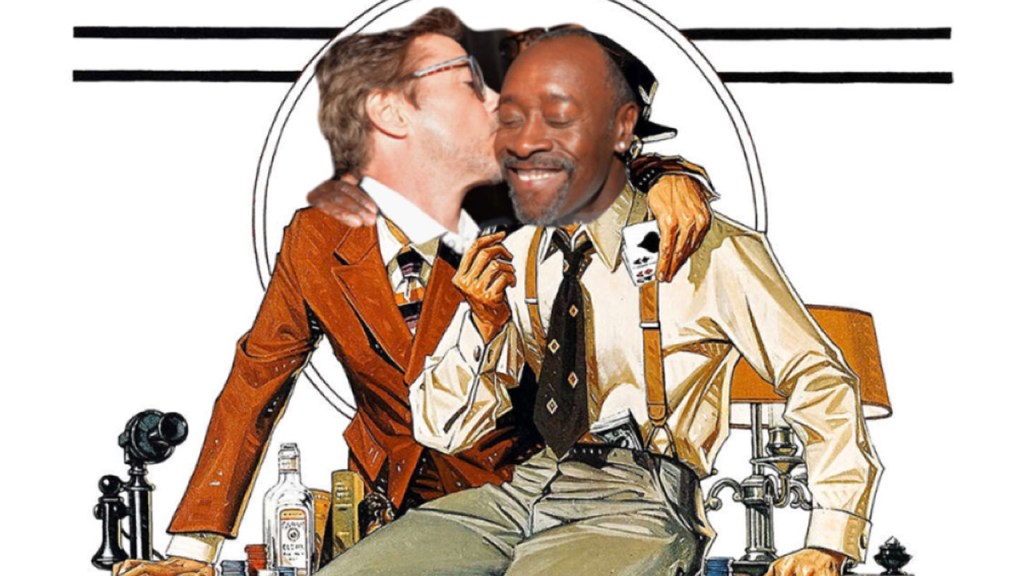
Butch Cassidy and the Sundance Kid reunited on screen – this time, for a light-hearted heist film. While The Sting lacks the thematic depth and emotional resonance of the duo’s previous outing with director George Roy Hill, it delivers just as much of the infectious fun. Redford takes centre stage this time as a young hustler looking to get even with with a murderous mob boss by ripping him off to the tune of millions. He’s helped by Paul Newman as a tired old pro who still has the moves and an eclectic cast of small-time movers and shakers who all play their parts in the elaborate con-job to perfection. The main joy of the film is observing the intricacies of the scheme – our heroes rent out a disused basement and transform it into a luxurious gambling hall complete with dozens of paid extras for the sole purpose of fooling one dangerous man. Newman shines in a crooked card game where he out-cheats the cheater while revelling in his own audacity and Redford gets to show off his action chops with a handful of sprinting chase scenes that would make Tom Cruise blush. Everything is underlined by a jauntily whimsical score that keeps us in the relaxed mood of the piece – even when things go wrong and blood is shed, it’s still just a lark after all. The relative straightforwardness of the presentation makes the few twists in the plan all the more unexpected, as the film breaks its own rules with a smile and a wink to make you feel like you’ve been fooled, just for a moment. Nothing about the form or message of this film is exceptional or groundbreaking, but as feel-good entertainment it sings – a fascinatingly upbeat Best Picture winner in a decade defined by dark and gritty dramas. 8/10.
Thursday – The VVitch
What awaits us in the dark? Like the characters in this film, we can only guess – they dream of witches and wolves, devils in the shape of farm animals and dark men in fancy clothes. There isn’t one correct interpretation of Robert Eggers’ the VVitch, which is knowingly oblique in the way it tells this colonial folk-tale. There’s nothing to suggest to that the horrors witnessed by the Puritan family aren’t literal – at times it may even be the only rational explanation – but the psychological element remains intact. Deeply religious people from the Old World adrift in the wilderness of untamed America, struggling to survive and isolated from everything they once knew, they cling to their faith to the point of mania. Perhaps the hardship that wears down their spirits has manifested in a collective psychotic break, paranoia turning them against each other and bringing their deepest fears to life as they succumb to the harsh reality of the land they’ve failed to adjust to. Atmosphere and imagery is carefully crafted – the use of natural lighting lends a captivating realism to everything that happens, both the horror and the drama. That’s where the real genius of the film lies – more than just being scary, this is a deeply sad story. No matter whether their torment is literal or imagined, it’s still heartbreaking to witness this family collapse, turning against each other and themselves. These aren’t stock archetypes for some slasher to eviscerate – they’re real people, just like us. I love when historical films emphasise that the past isn’t some fictional alien planet but the world we live in, just understood a little differently. 10/10.
Friday – Pulp Fiction
Tarantino’s second feature has long been one of the most overrated in the film canon – for so long and so vocally, in fact, that I’m beginning to believe it may actually be underrated in modern discussion. No film better exemplifies the independent spirit of the 90s, for better and for worse – already the throttling grasp of the Weinstein Company was taking control of the narrative, ensuring that the explosion of outsider American art would be subsumed into the mainstream almost entirely by the end of the decade. Still, the influence of that one glorious moment persists, and the disciples of the 90s indie boom (Tarantino, Fincher, PTA, Spike Lee, Linklater, Nolan etc.) who broke into Hollywood have largely retained their creative voices and visions. The further we get from Pulp Fiction the more polarising it is sure to become – to say it’s cultural attitudes have aged well would be a bald-faced lie, but it’s form and storytelling remain fresh and vital even after three decades of imitation. Three separate but connected stories, with the second and third acts swapped around and the ending plonked before even the prologue, a star-studded cast of characters where even the walk-on roles are among the most memorable of all time and a soundtrack that set the new gold standard for cinematic needle-drops. Not to mention, this is my Mum’s favourite movie – I couldn’t give it less than a 10/10 even if I wanted to.
Saturday – Gladiator
I had the thought while watching this that Ridley Scott is very similar as a filmmaker to Stanley Kubrick, with one key distinction – perfectionism. Kubrick is perhaps the most famous perfectionist in cinema, the gaps between his films growing increasingly wide as his obsession with understanding his own process grew. Scott operates on almost the opposite end of that spectrum, directing 29 films over his 47-year career and even releasing two films a year in 2001, 2017 and 2021. Compare this with Kubrick, who completed 13 features in the same period of time, with a gap of 12 years between his last two. Kubrick wrote nine of those films and was heavily involved in developing everything he worked on, often over a period of many years, while Scott has never written a screenplay, with even his most iconic films being pre-existing scripts that he took an interest in directing. Of course, Kubrick’s perfectionism paid off and secured his place as one of the most revered directors of all time, with the latter ten films of his career all being considered canonical masterpieces. Scott, on the other hand, has a mixed reputation, but look at the numbers – his filmography is twice the size of Kubrick’s, and contains seven films that are consensus classics as well as at least seven that are at various stages of popular and critical re-evaluation. They’ve both created classics in a variety of genres, both excel in realising otherworldly settings as tangible realities, both engage with new filmmaking technologies in innovative ways. Ridley may work faster and seemingly care less about what projects he takes on, but his craft is undeniable – who’s to say that Kubrick wouldn’t have made some stinkers if he upped his output or directed a dud script? Give Ridley the right material and he’ll make it soar – such is the case with Gladiator, a simple yet powerful story of personal tragedy in the midst of sweeping historical drama, elevated by Ridley’s eye for scale and ability to wrangle a large cast. The film feels timeless – the CGI is almost unnoticeable outside of a few dodgy animal effects and there’s a conscious effort to evoke the image of sword-and-sandal classics like Ben-Hur and Spartacus (another Kubrick connection) without feeling like a hollow homage. The 2000s were a golden age for large-scale blockbusters – it’s only fitting that the first Best Picture of the decade was the film that truly kicked off the short-lived revival of the Hollywood Epic. There are certainly parts of the film that feel rushed, a tad sloppy – Joaquin Phoenix’s performance is good but the film doesn’t entirely know what to do with the energy he’s putting out, creating a villain who threatens to unbalance the picture at times, while some plot developments inevitably feel cramped even within a 150-minute runtime – but these are nitpicks in the grand scheme of things, dwarfed by monumental success of most every other aspect of production and story. Hopefully we all learn to appreciate Ridley a little more while he’s still here batting at a hit-rate of at least one classic in every three – and if he thinks Gladiator II is his best yet, I think we’re all in for a treat this November. 9/10.
 Oscar Talks Movies
Leave a comment