by Oscar O’Sullivan
Monday – Clan of the White Lotus
The kung-fu film, beyond being the home of some of the greatest fight choreography ever put to film, is also a genre primarily concerned with one central idea: overcoming adversity. The average kung-fu hero is usually poor, oppressed, an outcast in society, who is faced with a punchable obstacle on their path to a better life, and spends much of the film’s runtime intensively training their body and mind until they are the greatest killing machine in human history. Sometimes the disadvantage they face is physical in nature (The One-Armed Swordsman, Crippled Avengers), but more often it’s an external force, a single all-powerful opponent that the hero must be prepared to face. Clan of the White Lotus falls into the latter category, with the mythological figure of Priest White Lotus. This white-robed, bearded villain will be familiar to any fans of Kill Bill, as Tarantino would reuse this character for his kung-fu homage. PWL is an untouchable martial-arts maestro, practically floating out of the way of attacks, laughing off his foes efforts, and striking back with such deadly force that each blow he lands leaves our heroes bleeding from the eyes nose and mouth. He’s a wonderful villain, not only because of his iconic design and hammy performance, but because he works as a clear endpoint for our hero’s journey. We see PWL in action multiple times throughout the film, each battle hammering home how unreachably powerful he is, and giving us a context for what our hero is training for. Kung-fu films will often spend more time on the training of it’s heroes than the actual battles they train for, and not only is a balance struck here between combat and practice, our heroes goals in training are made extremely clear and regularly reinforced. Gordon Liu, one of the great kung-fu actors, has a talent for selling unusual choreography. In this film, he goes from striking like a crane/tiger hybrid to ducking and weaving like a dancer, practicing movements on paper dummies to attack without so much as creating a draft, and finally mixing martial arts with acupuncture, darting in and out while producing an endless stream of needles from his ponytail. And when the obstacle is inevitably overcome, Liu’s training paid off and the oppressor defeated, the movie is over. That’s it. We don’t need to see how the defeat of the Clan of the White Lotus changes society, we don’t need to see Liu triumphantly reunite with his found family, because none of that is what the film is about. It’s about the process, the training, the struggle, and the result, so the film ends in that moment of immediate triumph, our hero frozen forever in joyous victory. White Lotus is a quintessential kung-fu film, the usual tropes and conventions played straight and honed to near-perfection. An excellent starting-point for anyone looking to get into the genre, a baseline experience before moving on to the more heightened, esoteric offerings from the Shaw Brothers catalogue. 8/10.
Tuesday – Solaris
Andrei Tarkovsky’s Solaris is a sci-fi film that doesn’t want to be sci-fi. The special effects are sparse, the set design restrained, the technobabble limited to the realm of the understandable. What interests Tarkovsky is the philosophical, emotional questions at the core of the story. The titular planet, orbited by a scientific research station, is a sentient being, a living ocean that reacts to the introduction of human consciousness to it’s atmosphere. It creates tangible apparitions, immortal beings that take the shape of people from the memories of the station’s inhabitants, that act out the remembered personalities of the forms they take, but are in actuality manifestations of a larger, alien consciousness. The question is, does the planet have a mind of it’s own, independent of the human influence? It’s manifestations believe that they are the original article until told otherwise, and grow to more closely resemble the humans they’re based on as the planet gleans more information from the minds of the scientists. Our protagonist, Dr Kelvin, is visited by his dead wife, and struggles to reconcile the fact that this living, breathing being is merely an imitation. Eventually, he comes to consider the alien as the real Hari, that her appearance and memories give her the right to exist as his wife. Is he projecting in his grief, or does he have a point? What is a person, if not the sum of their memories and their relations with others? The other scientists aboard fear the potential of the planet and reject the visitors as mere illusions, maintaining that it’s merely an unaware life-form mimicking human behaviour. We have to ask, when does imitation human behaviour become genuine human behaviour? The questions of this film can very easily be applied to our current struggles with A.I. Yes, machines can only replicate behaviours that we give them, but what is being human if not a series of identifiable behaviours? We obviously don’t have the answers, and neither does the film. Kelvin’s final acceptance of the planet’s personhood is framed ambiguously. Has he found paradise or damnation? Did he finally reconcile with his past, or abandon it for a fantasy, a pointless dialogue with a mere parrot of his own inner self? The scenario itself is underdeveloped, rushing past exposition or mechanical explanations. There’s never any mystery about what’s happening, but at the same time it’s not bothered with the scientific basis for an interaction like this. It’s a thought experiment, a philosophical conundrum, a parable begrudgingly told through the medium of first-contact science fiction. Tarkovsky battles the genre, hammering it into the shape he needs to fit the spiritual story he really wants to tell, and the final product works in despite the disjointed feeling. 8/10, a fundamental sci-fi story, if a little dry.
Wednesday – Enter the Dragon
Bruce Lee is probably, in Western pop culture at least, the most iconic martial arts actor to ever live. His image, his persona, even the way he shouted mid-strike, decades of homage and imitation have made him a symbol on a level usually only achieved by fictional characters. Enter the Dragon was his first big American film, but his last completed film before his untimely death in 1973. For being one of the most iconic kung-fu films ever made, it’s a truly unusual example of the genre, feeling more like a James Bond-esque spy adventure with a martial arts twist. Lee also shares his screen-time with two American protagonists (John Saxon actually believed himself to be the sole lead for much of the shoot), and the story is surprisingly light on action until the final act. When that final act does kick off though, it kicks all the way off. Lee rips off his shirt, grabs those nunchucks, and takes on the world. From the villain’s cave-bound lair to an open-air free-for-all to a drawn-out duel amidst a treasure room and a dizzying hall of mirrors, the final act is almost too much, an explosion of action and excitement suddenly overtaking a movie that previously moved at a leisurely clip. While Lee may not get to really cut loose until the end, he’s a solid presence throughout, overcoming the language barrier to deliver a powerfully stoic performance with just a dash of cheekiness. The island setting manages to provide a surprising variety in it’s backdrops, thanks to exceptional production design and an intimidatingly large assembly of extras. It’s cliched for sure, almost parodical at times, but takes it’s action and presentation seriously. A martial arts spectacle with an entertainingly strange plot, Enter the Dragon is a muscular 9/10.
Thursday – Miami Vice
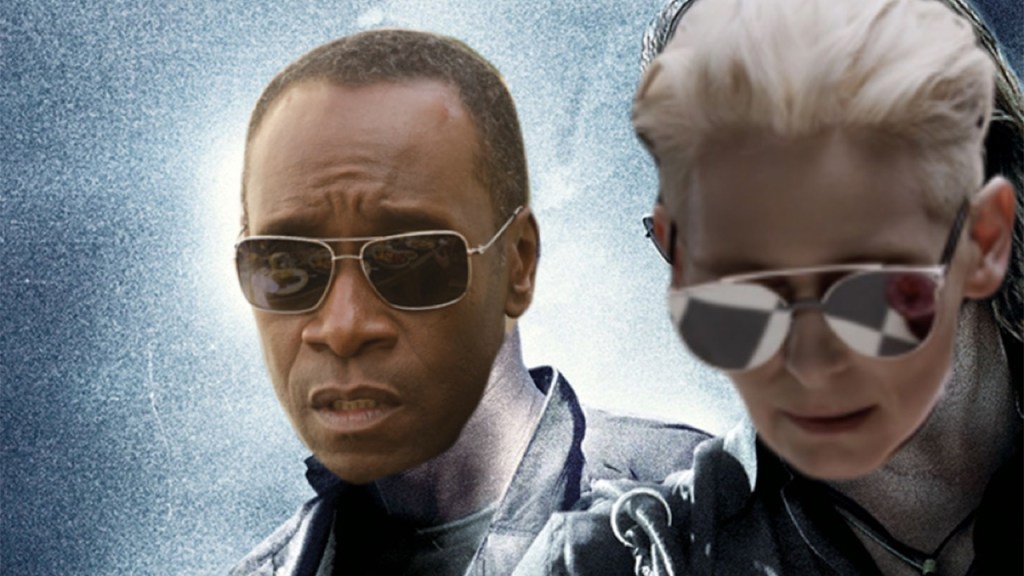
“Time is luck”. These words, spoken by Sonny Crockett in a stilted attempt to woo the businesslike Isabella, could very well be spoken in any film directed by Michael Mann. His heroes are always battling time in one way or another. Whether they be ex-cons trying to maximise their life on the outside, CIA analysts racing to unravel a killer’s psyche before he strikes again, or champion boxers watching their competitive lifespan run out, time is always the true enemy in Mann’s world. However, this doesn’t mean his films are all pulse-pounding sprints to the finish, in fact far from it. Time is stretched to capacity in many of his films, savouring quiet moments, luxuriating in the processes and procedures of the protagonists and their work. It’s only when things go wrong and the violence within these men explodes outwards that time resumes it’s normal flow, quick and punchy fight scenes shaking his heroes out of their stupor and reminding them just how precious their time is, if it hasn’t already run out. In Miami Vice, the film adaptation of his own hit 80s TV show, Mann rejects the urgency of the classic police procedural format. The film begins with a startling suddenness, opening with Crockett and Tubbs mid-mission, no time for catch-up or explanations, before being sidelined into another ongoing case with a speed that might make your head spin on first viewing. Once the facts are established and the plan to infiltrate the cartel set into motion, the film stops, breathes deeply, and leans back. We follow our leads through the streets of Columbia, sit in with them as they cruise across lush jungle landscapes in their cargo plane and loiter in liminal night-time cityscapes. Crockett finds time in the midst of everything to romance the cartel’s negotiator, skimming across the waves with her in his GoFast Boat to go clubbing in Cuba. Time becomes impossible to judge: are days passing between scenes, or weeks? The handheld digital cinematography with it’s distinctive texture and unlimited focus creates a heightened realism, a sense of being a formless observer in this strange, stylised reality. Time is luck, and for Crockett, it’s in short supply. He’s listless, absent, only capable of focusing on the present moment when he’s in the field or in the arms of a lover. Otherwise, he floats through reality, adrift in time and space. Filmed at the height of Colin Farrell’s substance abuse, his very real issues bleed into the character to create a strangely compelling performance, a man lost in unknowable thoughts. Tubbs is, unfortunately, less developed. He fades into the background while Crockett pursues romance, acting only as a dispenser of information or progressor of the plot, to cool, too collected, too confident. Even when his own love interest is kidnapped to kick off the film’s final burst of action, it feels like a function of the plot rather than a thematic device. While Crockett is forced to confront his hollow lifestyle and send away the person who briefly made him feel alive again, Tubbs begins and ends the film as the exact same character. Perhaps this was a result of Jamie Foxx’s well-documented on set clashes with Mann resulting in scenes being cut down, or maybe the intention was always to tell Crockett’s story with Tubbs as a supporting player. The film’s story and presentation are still magnificent, if perhaps a little impenetrable, a definite case of a film designed to be rewatched, but the imbalance of it’s supposed leads does make it feel like something was lost in production. Filmmaking, like all things, is governed by time. When time runs out, you make do. Miami Vice is a lucky 9/10.
Friday – Shiva Baby
Lets be honest here: representation does matter. It’s been hard to come by in mainstream film for a very long time, but thankfully that’s changed in recent years. By the same dint, representation isn’t everything. To say that a character needs to look, talk or act like yourself to be relatable is a reductive concept no matter which way you cut it (I’m looking at you, grown adults crying online about the mere idea of Rapunzel being played by an Indian woman). Shiva Baby, the feature debut of up-and-coming indie darling Emma Seligman, isn’t a story about my background. I’m not a Jewish bisexual student of gender studies who’s having an affair with a family friend to pay for college. But in many ways, this is still a story that’s relatable to me. It’s about the deep, incurable awkwardness that some people carry with them all their lives, and the social situations that inevitably bring it to the surface. As a character study and an acting showcase, it’s exceptional. Both the director and lead actress Rachel Sennott have barged onto my personal list of young filmmakers to watch, with a film that feels cleverly written without being artificial, and manages to achieve an emotionally satisfying resolution despite it’s brief runtime. However, the film doesn’t quite flow as a narrative. It creates situations that are rife for comedy and confusion, and it holds back. It keeps teasing conflict and combat to build an atmosphere of suspense, but every time Sennott disentangles herself without incident a little bit of tension leaks out of the whole enterprise, until the eventual, inevitable meltdown that caps it off can’t feel like anything other than a let-down. The final scene’s sweetness does salvage the disappointment of the muted climax, but I can’t help but wish it had gone further with it’s comedy of manners as a whole. Still, I’ve heard good things about their follow-up feature Bottoms, so I’ll be looking forward to checking that out. Shiva Baby gets a 5/10 for now, though I wouldn’t write it off outright.
Sunday – Zatoichi’s Revenge
This is the best Zatoichi film so far, so great in fact that I’m going to give it a review all to itself later this week. A combination murder mystery/spaghetti western pastiche, Zatoichi’s Revenge gets a well-deserved 10/10 from me.
 Oscar Talks Movies
Leave a comment