by Oscar O’Sullivan
Monday – Days of Heaven
For any readers living in Cork city, where do you think of when I say the word cinema? Do you stick to the Gate (or the Arc as it goes by now), or do you trek out to Mahon Point for the Omniplex? Or are you aware of the proverbial Third Cinema? The Triskel Arts Center, tucked away on Tobin Street just off Grand Parade, is the real home of cinema in Cork. With an ever-changing schedule of indie films, international releases and classics, the Triskel is unlike any other cinema in Cork.
I bring this up because The Triskel is where I went to see today’s film, Days of Heaven. The 1978 work by director Terrence Malick tells the story of poor American farm labourers in the early 20th Century. It’s expansive, ethereal, beautifully shot, and somehow only an hour-and-a-half long. I first saw this film in about a year and a half ago, when it was streaming on some service or another. Having seen it both ways now, a television screen doesn’t do it justice. The film is a visual marvel, and the recent 4K remaster highlights the ludicrous detail contained in every frame of film. The story is simple, the characters distant, thoughts and feelings conveyed through broad physical performance and speculation from the unreliable narrator, who is delightfully scatter-brained and unhurried in her recalling of events. It’s a film constructed almost entirely of vignettes and montage, with probably more silences than scenes of dialogue, and all underscored by subtle but beautiful compositions by Ennio Morricone.
The presentation is stunning but I can’t help but feel like I’m still on the outside looking in. I appreciate it more on this second watch, but there’s still an emotional disconnect that keeps me from loving it. Maybe I’ll come back to it in a few years and find a way in, but for now, it’s a tentative 7/10. I will say it’s probably the best place to start if you’re interested in director Terrence Malick. His later films are more interesting, but this gives a taste of his style in a much shorter runtime with a more straightforward plot.
Tuesday – Drive-Away Dolls
Drive-Away Dolls is a fun little distraction that I’ve already written about at length in my review, so check that out if you haven’t already.
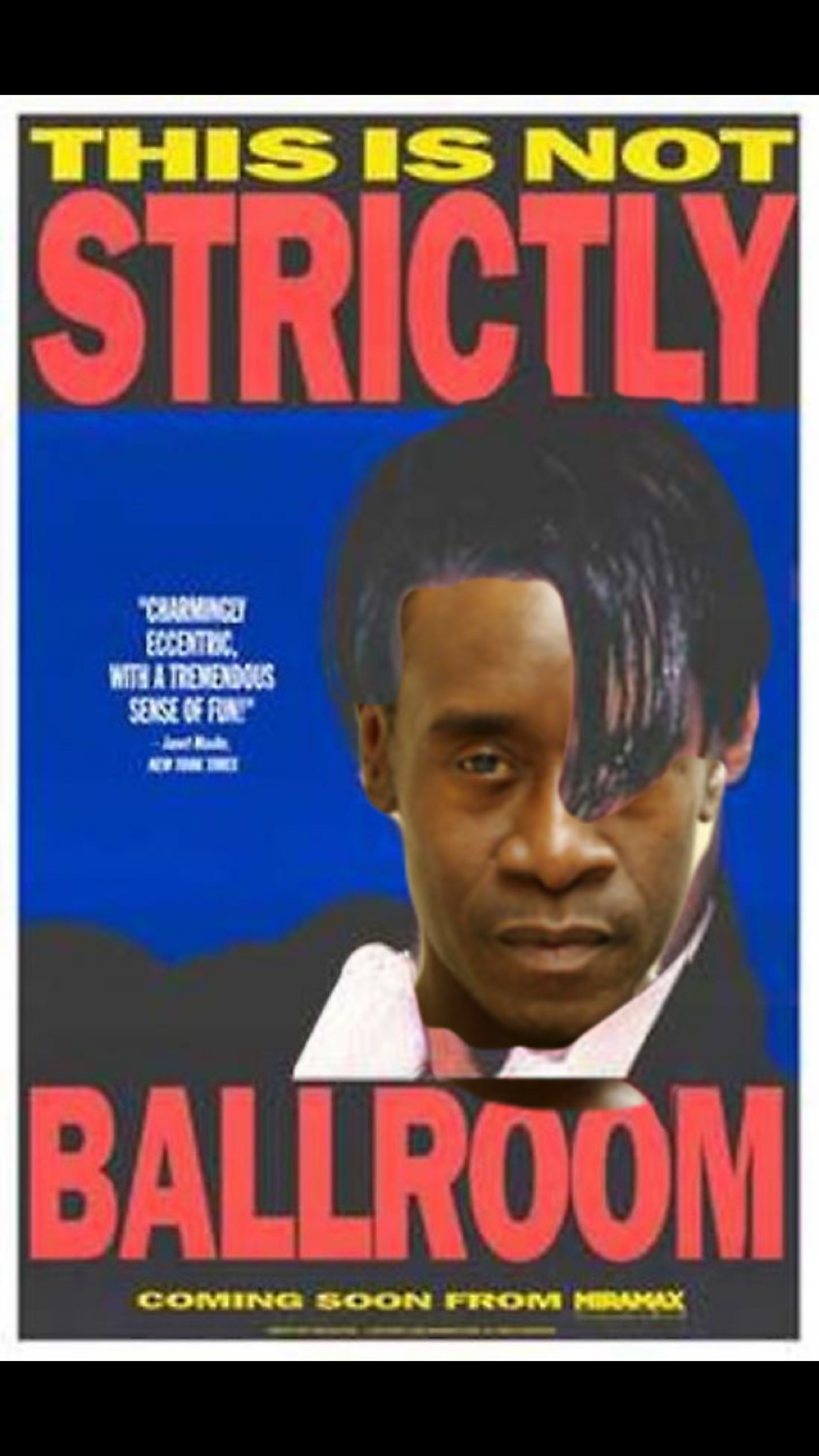
Wednesday – Strictly Ballroom
The films of director Baz Luhrmann are said to be an acquired taste. His cinematic language is heightened, frantic, often having more in common with music videos than other feature films. The question on my mind for this film was whether his first effort would be markedly different from his later work. Surprisingly, it’s on very much the same level of elevated fantasy as the rest of his filmography. There are budgetary limitations of course, with none of the large sets or eye-catching special effects integrations you’d find in Moulin Rouge or The Great Gatsby, but his intent is the same. The camera moves with reckless abandon, swooping and circling and jumping between dozens of angles in the space of a single scene. The action will cut away to other characters reacting, jumping between wide shots and close-ups, heightening the emotion of big moments. There are also key moments where the cutting eases up, and the camera follows choreography in lovingly unbroken long takes. Emotionality is central to the Baz Luhrmann experience, every single decision behind the camera made with the intent of provoking a reaction from the audience, creating a relentless energy that keeps you on the edge of your seat for the entire runtime.
A big part of that experience is the style of performance he directs. Like his later films, Strictly has a large cast of characters, all of whom are subordinate next to the lead romantic pair, but every named supporting player has a vital role to play. The characters are defined by a couple of comedic traits, and a set position in the power dynamics of the story, making them deceptively simple. Most of them have an agenda or secret that is revealed at a pivotal moment to drive the leads forward or provide a stumbling block on their path, and everyone has a standout moment in the grand finale. The actors here, all local Australian performers, all understood the assignment, and deliver performances that are theatrical in the classical sense of the word, playing to the cheap seats for big laughs, but making the somber, human moments all the more shocking and effective.
And of course, there’s the central romance, the boy and girl from two different world who come together to defy expectations and make their mark on the restrictive system they live in. It’s cliche for certain, and no less effective for it. Paul Mercurio is handsome and talented enough for us to forgive the early arrogance of the hero, while Tara Morice is instantly lovable as the awkward, plain girl that can’t even get a chance to prove herself. Like the rest of the film, it’s a theatrical romance, Shakespearian even, developing in leaps and bounds, betrayals of trust being patched over two scenes later, and the tried-and-true montage of love doing much of the heavy work, but the chemistry and the drama of the story sells it completely.
Baz is a personal favourite director of mine, so take my praise with a pinch of salt. I have it on good authority that his style can be off-putting for some, so maybe it won’t be for you. That said, this is a 9/10 film, a shockingly fully-formed debut, a film that overcomes limitations of budget and experience to deliver a spectacle on par with anything Hollywood can choreograph.
Friday – Oscar & Lucinda
Now I’m not looking for a pat on the back for watching a movie directed by a woman. Really, why is that any different from watching a movie directed by a man? It shouldn’t be, and in terms of appraising a film’s quality it certainly isn’t. The fact of the matter is, watching woman-directed films is still viewed as something outside of the norm for the simple fact that they often aren’t as successful as films directed by men, critically or commercially. If you look through the all-time box-office hits or various greatest movies lists, you’ll find the lists dominated by male names. For example, the popular book 1001 Movies You Must See Before You Die, a meticulously crafted film canon that is very clear about it’s criteria for inclusion, features maybe five female directed films from the beginning of the book up until the mid-1960s, and two of those are from Nazi propagandist Leni Riefenstahl. All this is to say, no matter what type or genre of movies you’re watching, it’s unlikely that you’ll stumble across woman-directed films unless you go out of your way to look for them. That’s why I make a point of watching at least one woman-directed film a week, every Friday, because in order to normalise a behaviour you must first go out of your way to perform it.
Oscar & Lucinda is directed by Australian director Gillian Armstrong, best known for the 1994 adaptation of Little Women. I purchased and watched this because the main character has the same name as me. Considering the relative obscurity of the film, I was pleasantly surprised. Starring a young Ralph Fiennes and Cate Blanchett, it’s a surprisingly lavish period epic, an unlikely romance between a minister and an heiress who bond over a shared addiction to gambling. It’s a strange story, with a mixed tone and uneven pacing, but it’s also deeply endearing. You know that a rom-com has worked on some level when your biggest complaint is that the leads don’t have enough scenes together. It also plumbs surprising dramatic depths, especially in the final act, where it takes a hard swerve into a colonialist thriller, with fussy and proper Oscar unwittingly trapped on an expedition with a pack of racist “explorers” who are more interested in exterminating the natives than any kind of discovery.
This isn’t a hidden gem, but it is a worthwhile curiosity. Seeing two of our greatest living actors so early in their careers makes this a must-see for fans of either lead, or for enjoyers of costume dramas looking for their next fix. It’s not streaming anywhere, but my DVD copy set me back all of a couple euro, so worth picking up for sure. 6/10.
Saturday – Hook
Steven Spielberg’s 1990s output is an interesting selection, with some of his all-time biggest critical and commercial hits, and a couple of duds, and sitting on the periphery right at the start of the decade is Hook. With one of the biggest all-star casts in his filmography, an all-ages adventure based on one of the most beloved stories ever written, it seems absurd that this isn’t more widely-discussed as a classic. The film isn’t without it’s problems (what film is?), some of which are inarguable. There’s an embarrassing shade of “90s Xtreme Action” about the Lost Boys that clashes awkwardly with the more classical, almost timeless tone of the larger film. The first act, which is possibly the best part of the film, also creates incongruity with what follows. Everything before the return to Neverland is a somber (if somewhat schmaltzy) portrait of a failed father, told with a lightly meta-textual angle on the Peter Pan story. The rest of the film, while following up on the ideas and feelings of the first act, is pure OTT fantasy, and the adjustment from grounded drama to slapstick pirate adventure is jarring at first.
What I cannot agree with is the most common complaint I see levelled at this film, that it is “cringe”. Cringe is an overused internet buzzword, a description not of the content of a piece but of your own reaction to it. You can reasonably say that something made you cringe, but a thing cannot be cringe in and of itself. Hook is frighteningly earnest, especially by our modern irony-poisoned standards, but it is this earnestness that elevates the film above it’s flaws. There is nothing cynical in the way it uses it’s source material. From Maggie Smith’s heartfelt portrayal of an elderly Wendy Darling, to Dustin Hoffman’s utterly unrestrained turn as a Captain Hook straight off the pantomime stage, there is no winking self-consciousness about this film, just pure sentimentality and reverence for the original story. Even Robin Williams as Peter Pan, a role which could so easily have become an absurd pop-culture parody, is pitch-perfect. He is perhaps the only actor who could have done this part justice, imbuing his performance with such unadulterated glee and reckless energy that you believe he is the boy who never grew up. Especially impressive considering that he spends the bulk of the runtime in the opposite wavelength as stodgy amnesiac Peter, who is so nervous and straight-laced as to be unrecognisable as the same character.
Combine this genuine emotionality with a beautifully realised fantasy world and iconography so ingrained in pop culture as to be almost mythical, and you have a film that you could only dislike of your own volition. People are afraid of earnestness in their media, decrying it as old-fashioned or unrealistic, which I think is a major failing of many modern sequels. They have to be reverent of their source material, but not so reverent as to appear sappy, referential with a nod and a wink, almost embarrassed of the past, but at the same time banking on nostalgia for it to get butts in seats. If Hook can be considered a “Legacy Sequel”, then it is surely one of the finest ever made. A delightful 8/10.
 Oscar Talks Movies
Leave a comment